
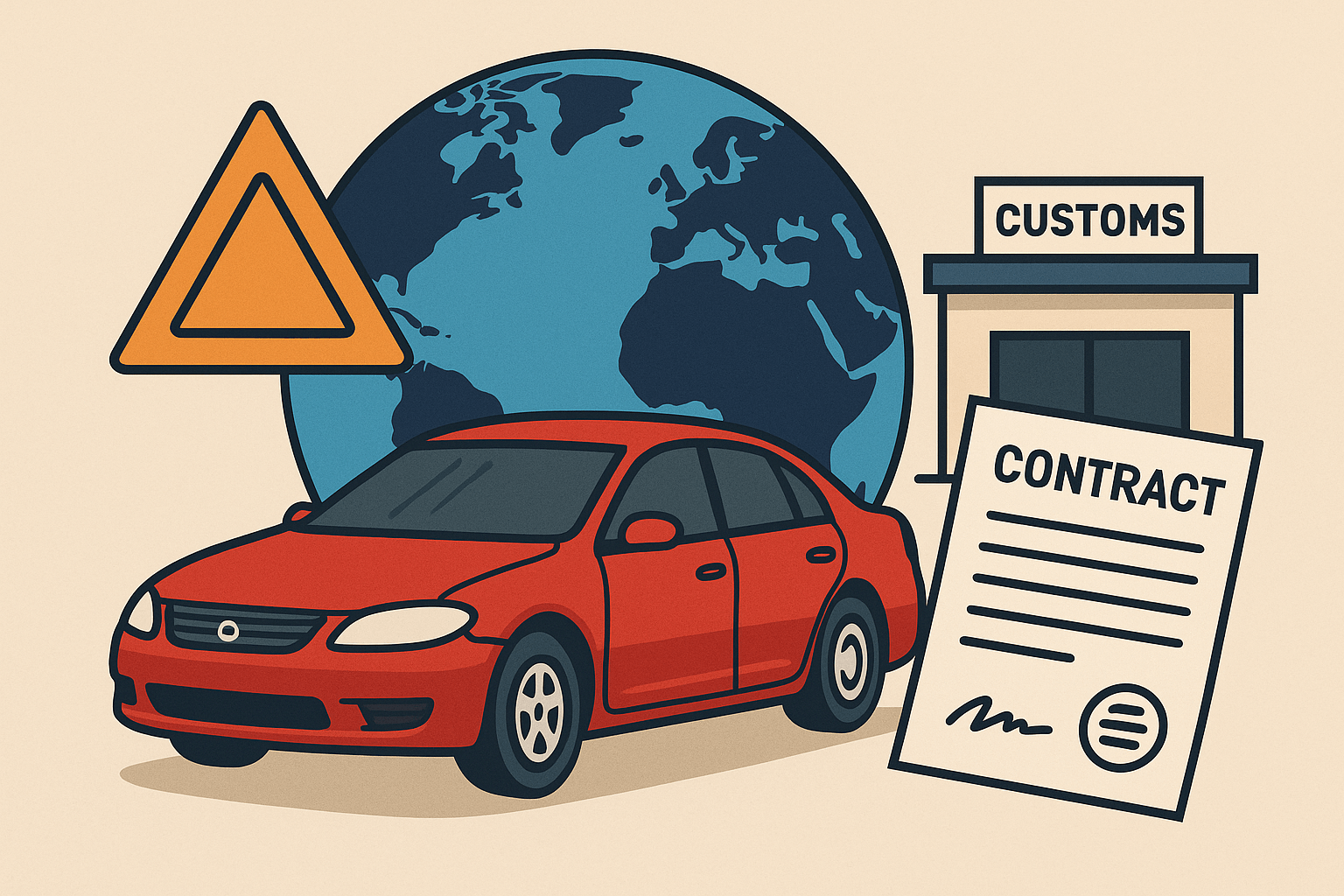
🌍🚗 What You Need to Know to Avoid Regrets in International Used Car Transactions
💡 Thinking about buying or selling a used car across borders?
International car deals offer exciting opportunities—rare models, better prices, and a broader market.
But beware: 🌐 cross-border transactions also come with hidden risks like scams, customs issues, and legal hurdles.
Here’s what you should know before entering the global used car market, so you don’t end up with unexpected costs—or a costly mistake. ⚠️
🌐 The Appeal and the Reality of Global Car Trading
One of the biggest advantages of trading used cars internationally is access to a wider selection at competitive prices. You might find rare or newer models not available in your local market, often at lower costs. This opens up valuable opportunities for both individuals and car dealers.
However, international deals also mean you’re stepping into unfamiliar legal, logistical, and cultural territory. Every country has different expectations and rules, and communication errors can lead to misunderstandings or even fraud. Since you likely won’t be meeting the seller or buyer in person, verifying their credibility becomes absolutely essential. Don’t rely solely on flashy websites or smooth emails—research business licenses, past transaction history, and online reviews to ensure you’re dealing with a legitimate partner.
📜 Know the Rules: Import Laws, Vehicle Standards & Paperwork
Before finalizing a deal, take time to understand the import regulations of the destination country. Some nations only allow cars under a certain age, while others prohibit right-hand drive vehicles. Emissions standards can be strict as well—if the vehicle doesn’t meet environmental requirements, it may not be allowed in at all.
Don’t overlook the financial side either. Duties, VAT, customs fees, and registration charges can turn a seemingly great deal into an expensive headache. To avoid delays or extra storage costs at port, make sure all documents are complete and accurate. These typically include the invoice, bill of lading, title, export certificate, and possibly a certificate of origin. Working with a reputable customs broker or freight forwarder can help ensure nothing slips through the cracks.
🔧 Safety First: Inspections, Contracts & Insurance
Because you’re often buying without seeing the vehicle in person, arranging a professional third-party inspection is one of the smartest moves you can make. These reports typically cover key points like mileage accuracy, accident history, rust, oil leaks, and the condition of the engine and transmission. A verified inspection not only builds confidence but can also be useful if a dispute arises.
Also, always insist on a written contract. This should clearly define payment terms, vehicle specifications, delivery methods (FOB, CIF, or DDP), delivery deadlines, and liability for delays or damages. Even in seemingly friendly transactions, a formal agreement protects both parties and reduces the risk of miscommunication.
Lastly, don’t forget about marine insurance. Damage during shipping isn’t rare, and insurance offers peace of mind for a relatively low cost. Think of it as a small investment that can save you from a big loss.
✅ Conclusion: Trust, Knowledge & Preparation Win the Race
🌍 International used car trading holds a lot of potential—but it’s not something to approach casually.
The most successful transactions are built on trust, knowledge, and careful preparation.
Research your trading partner thoroughly, understand the rules of the destination country, double-check your documents, and always protect yourself with contracts and insurance.
🚘 Don’t let excitement cloud your judgment. In the world of global auto deals, it’s not just the visible specs of the car that matter—it’s the hidden risks and how you manage them that determine your success.
We write rarely, but only the best content.