
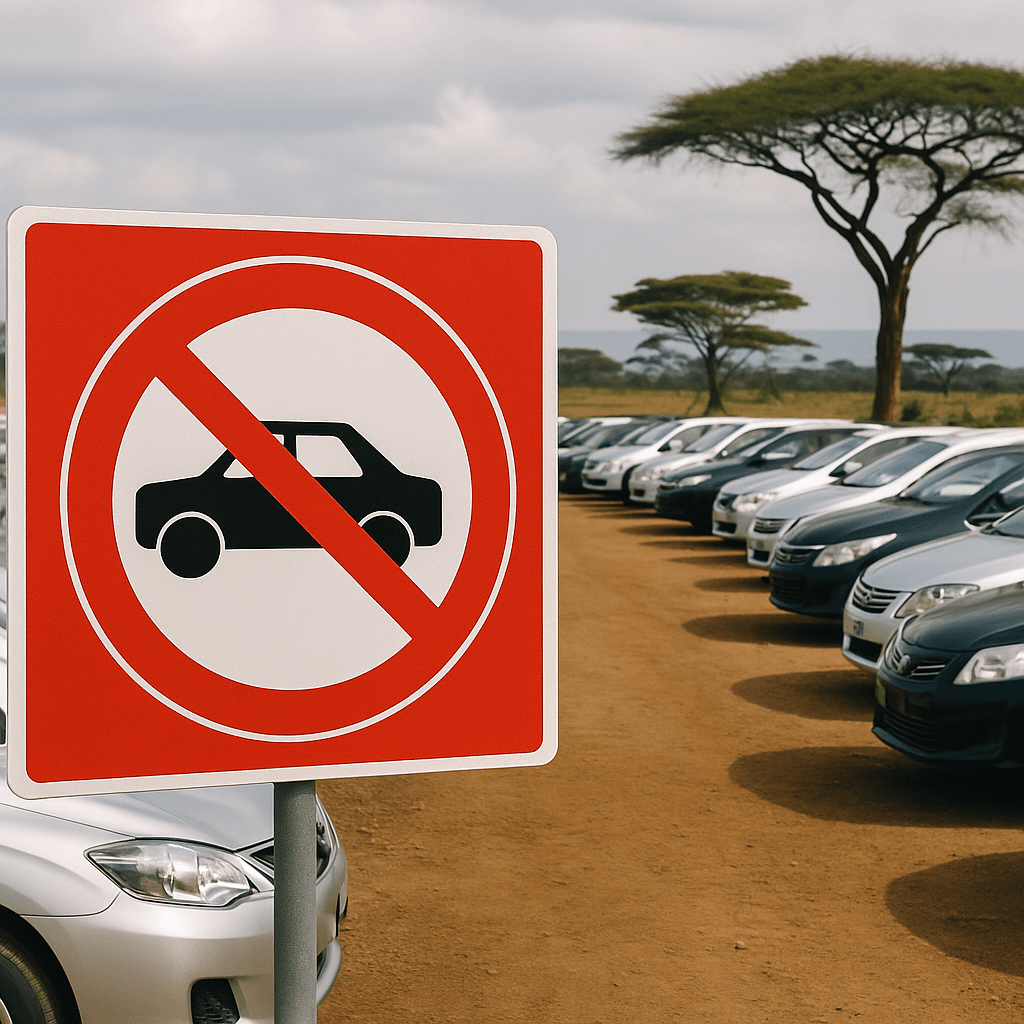
🚫 Banned Used Cars? How Africa’s Environmental Regulations Are Impacting Japan’s Export Industry
🌍 What’s Happening in Africa?
For years, Africa has been one of the most important destinations for used Japanese cars. Affordable, reliable, and right-hand drive — Japanese vehicles have dominated markets across Kenya, Tanzania, Nigeria, and beyond.
But in recent years, especially since 2023, that tide is turning.
Governments across the continent are implementing stricter import regulations, including:
- ❌ Bans on vehicles older than a certain age (typically 5–10 years)
- 🚫 Restrictions on right-hand-drive vehicles
- 🌫 Rejection of cars that fail to meet emission standards (e.g., Euro 4, 5)
The message is clear: Africa no longer wants to be the dumping ground for old, high-emission vehicles.
📚 Why Are These Regulations Being Enforced?
🏙 1. Urban Air Pollution
Major cities like Nairobi, Lagos, and Addis Ababa are experiencing serious air quality problems. Old cars with poor emissions performance are a major contributor to this crisis.
🌐 2. Global Pressure from Europe and International Organizations
Groups like the UN Environment Programme (UNEP) and the EU are urging African nations to limit the import of polluting vehicles. Financial aid and trade incentives are increasingly tied to environmental commitments.
🔋 3. The Push Toward Cleaner Transport
As part of global sustainability efforts, African governments are starting to support EVs, hybrids, and cleaner fuels. Though infrastructure is still developing, the policy shift is real.
🗺 Country-Specific Examples (as of 2025)
| Country | Key Regulation Summary |
|---|---|
| 🇰🇪 Kenya | Bans imports of vehicles older than 8 years (passenger cars) |
| 🇬🇭 Ghana | Enforces minimum Euro 4 emissions standard for imports |
| 🇳🇬 Nigeria | Prohibits cars over 15 years old |
| 🇷🇼 Rwanda | Only left-hand-drive vehicles allowed |
| 🇿🇦 South Africa | General ban on used passenger car imports |
🚗 How Japan’s Used Car Export Industry Is Affected
❌ 1. Fewer Viable Markets
With Kenya and Nigeria imposing tighter controls, Japanese exporters can no longer rely on volume sales of older vehicles. The traditional model is breaking down.
📉 2. Depreciating Inventory
Cars that used to sell well in Africa — 10–15 years old, gasoline-powered, right-hand-drive — are now often unsellable in key countries, reducing their value significantly.
🛠 3. Rising Compliance Costs
Exporters now need to:
- Ensure emissions/test certifications
- Translate and validate documentation
- Handle costly vehicle conversions (e.g., right-hand to left-hand drive)
- Maintain unsold inventory longer, incurring storage fees
The result? More complexity, more risk, less profit.
💡 Strategic Responses for Exporters
✅ 1. Rethink Export Destinations
Not all African countries have strict bans. Markets like Mozambique, Uganda, and Zambia remain more flexible — for now.
Use up-to-date data and regulatory research to identify low-risk countries with high potential.
✅ 2. Shift Toward Cleaner, Newer Vehicles
Focus on:
- Hybrid models (e.g., Prius, Aqua)
- Left-hand-drive vehicles for regions like the Middle East, Latin America
- 5-year-old or newer units that meet emissions rules
This aligns with global environmental trends and reduces compliance friction.
✅ 3. Build Local Partnerships
Collaborate with:
- Trusted customs clearance agents
- Local garages for emissions upgrades or steering conversions
- Regulatory consultants or export advisors
By handling part of the process locally, exporters can expand capability without absorbing all the cost.
🔮 What’s Next? A Shift From Quantity to Quality
The golden age of bulk used-car exports to Africa is winding down. What’s rising in its place is a more nuanced, compliant, and environmentally aware model.
Future success depends on:
- Product selection that meets emissions and safety standards
- Country-specific strategies, not one-size-fits-all shipping
- Sustainable and ethical export models that align with global trends
📝 Final Thoughts: Headwinds, But Also Opportunity
Yes, regulations are tightening. Yes, the old ways are fading.
But this is also an opportunity — a wake-up call for Japan’s used car export industry to evolve.
🚗 The market is still there — just different.
🧠 Exporters who adapt early will win.
🌍 Sustainable, targeted exports are the future.
📌 Ready to export smarter?
📌 Then it’s time to stop asking “Where can I send this?” and start asking “What do they actually need?”
We write rarely, but only the best content.