
⚡ Don’t Ignore Electrical Issues in Your Car: Common Signs, Causes, and Easy Checks
Is your car acting strange lately? Maybe the engine won’t start smoothly, or the lights flicker now and then.
These could all be signs of one thing: electrical system trouble.
Modern vehicles are heavily reliant on electronics — from engine management and braking systems to windows, lighting, navigation, and even air conditioning.
When the electrical system isn’t functioning properly, your car’s safety, comfort, and drivability can be compromised.
In this blog, we’ll break down the most common symptoms of electrical issues, explain their causes, and walk you through what you can check yourself before calling a professional.
🔌 Why Do Electrical Problems Happen?
A car’s electrical system consists of several key components:
- The battery
- Wiring harnesses and connectors
- ECUs (Electronic Control Units)
- Various motors, relays, and switches
If any of these parts malfunction or lose connection, entire systems can fail, even if the mechanical components are fine.
Electrical issues are commonly caused by:
- A weak or aging battery (especially in short-trip vehicles)
- Corrosion on terminals or connectors
- Moisture from rain or humidity entering the system
- Aftermarket devices overloading circuits
- Improper repairs or damage from previous accidents
These problems are often intermittent — appearing unpredictably and becoming worse over time.
🚨 Common Electrical Symptoms You Shouldn’t Ignore
Here are the most frequently reported electrical-related issues in modern vehicles and what they might indicate:
1. Engine won’t start or cranks weakly
Most likely causes: dead battery, faulty starter motor, or a blown fuse.
2. Dim or flickering headlights and interior lights
Often related to a failing alternator or low battery voltage. Could also signal a grounding issue.
3. Fast or irregular blinker signals
This may indicate a blown bulb, failing relay, or inconsistent power supply.
4. Power windows or door locks not working
Could be a faulty switch or motor, but often it’s a loose or corroded connector.
5. Blacked-out navigation or instrument displays
These may point to power instability, a failing ECU, or software-related issues.
All of these symptoms could start mildly and become more frequent — or suddenly cause system-wide failure.
🔍 Simple Checks You Can Do Yourself
Some minor electrical problems can be spotted and addressed without special tools.
Here are a few steps anyone can take:
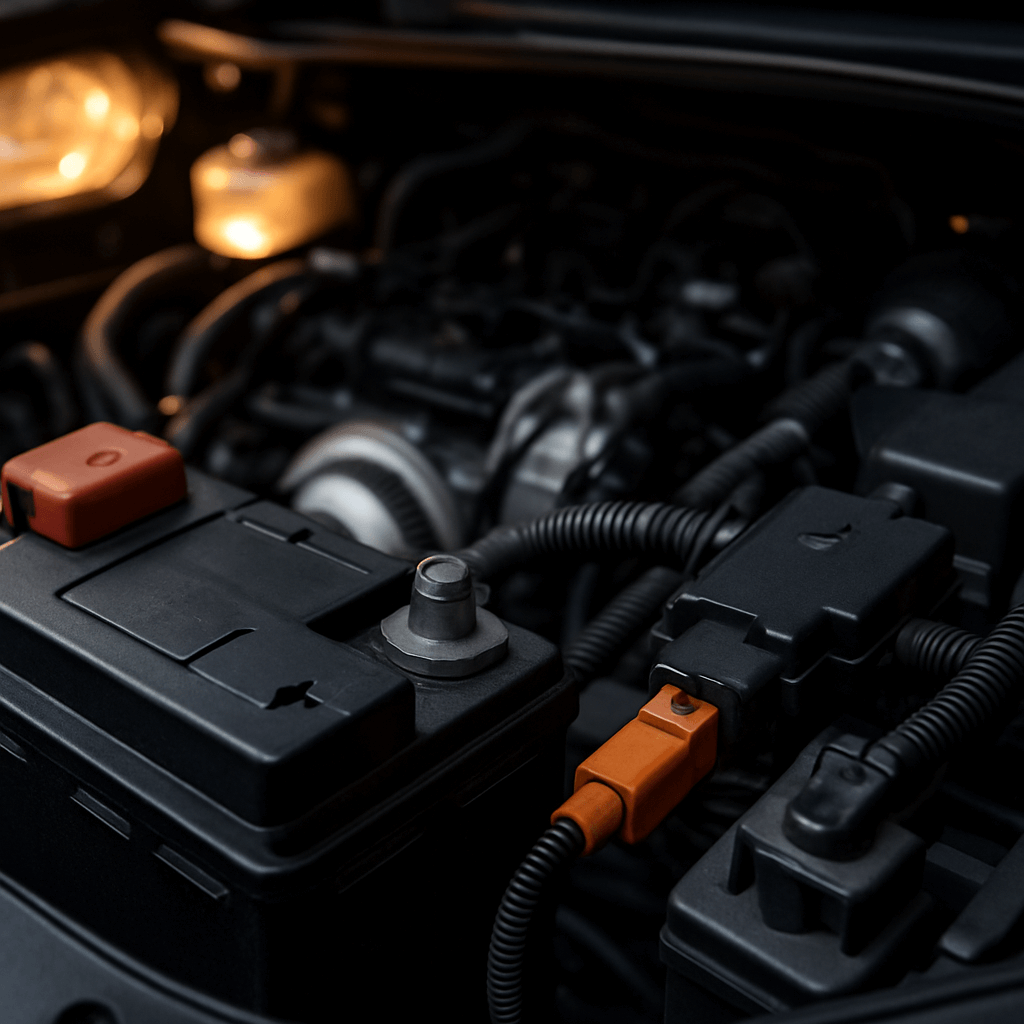
🔋 Check the battery
- Look for corrosion (white powdery buildup) on the terminals.
- Use a voltmeter — a healthy battery should show about 12.5V when the engine is off.
💥 Check the fuses
- Open the fuse box and visually inspect for blown fuses.
- If needed, replace with one of the same amperage.
(Never use a higher-rated fuse — it’s dangerous.)
🧩 Check for loose connections
- If a switch or light works only sometimes, check the connector.
- Carefully unplug and reinsert — a poor connection could be the cause.
🌙 Watch for battery drain
- Ensure no devices (interior lights, screens, chargers) stay on when the engine is off.
- A small drain overnight could leave your battery dead by morning.
🛠️ When to Leave It to the Pros
Electrical problems can escalate quickly and may not always be easy to trace.
In the following situations, it’s best to get help from a qualified mechanic or dealer:
- Warning lights (battery, ABS, check engine) are constantly on
- Multiple electrical components fail at once
- The car has flood damage or accident history
- You’ve replaced the battery multiple times with no improvement
Modern vehicles use CAN (Controller Area Network) systems, where all components are interconnected.
A simple short or voltage spike can affect multiple subsystems — DIY repairs could make things worse if not handled correctly.
✅ Summary: Electrical Trouble Is Often Silent — Until It’s Serious
Unlike engine knocking or brake squealing, electrical issues often develop quietly.
They may seem minor at first, but if ignored, can lead to safety risks or expensive repairs.
Here’s how to stay ahead:
- Don’t dismiss unusual behavior — investigate early
- Perform regular checks on battery and fuses
- Let professionals handle anything complex or systemic
Your car’s performance, reliability, and safety rely on its electrical systems running smoothly.
Make sure you’re not just fueling it — but powering it properly.
We write rarely, but only the best content.