
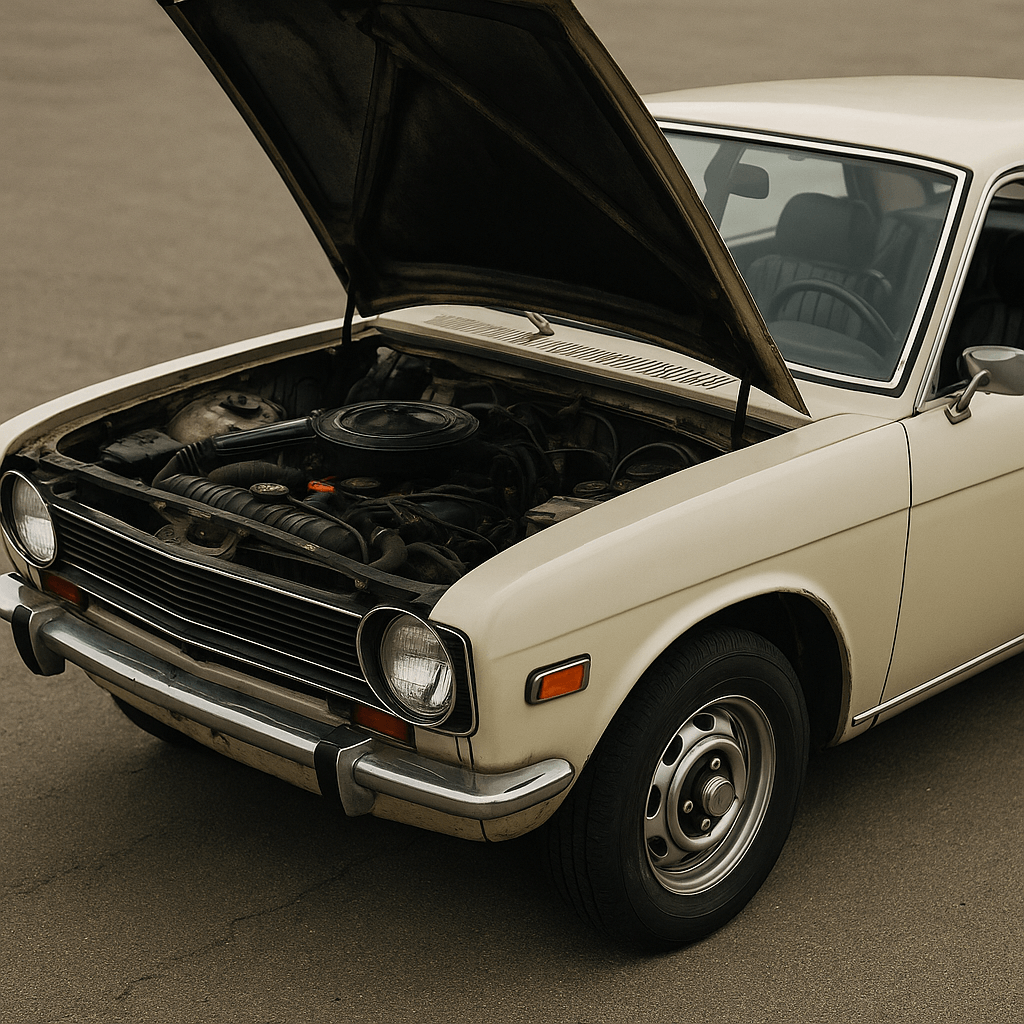
🚗 The Ultimate Guide to Buying a Classic Car: 25 Essential Checkpoints to Avoid Regret
Classic and vintage cars have a timeless appeal. Whether it’s the retro styling, the mechanical feel, or the sense of character, these older vehicles offer something modern cars often lack: soul.
But while classic cars are romanticized, they also come with risks, responsibilities, and maintenance challenges. Many owners jump in without fully understanding what they’re getting into—and end up overwhelmed by constant repairs, scarce parts, or high upkeep costs.
This guide breaks down everything you need to check before buying a classic car. Whether you’re eyeing a 1990s JDM coupe or a 1960s European sedan, use this checklist to make sure you’re not buying someone else’s problems.
✅ 1. Body & Exterior: The First Layer of Inspection
◾ Rust
The #1 enemy of old cars. Focus on critical areas:
Wheel wells, rocker panels, trunk floor, door bottoms, floor pans, and underbody.
Even minor surface rust can hide deep corrosion beneath.
◾ Panel Gaps & Alignment
Uneven gaps or doors that don’t close properly may indicate past accidents or frame misalignment.
◾ Paint Condition
Is it the original paint? A respray? Look for uneven finish, overspray, bubbling, or clear coat peeling. A good repaint is fine; a sloppy one is a red flag.
✅ 2. Engine & Mechanical Condition
◾ Cold Start Behavior
Does the engine start quickly when cold? Does it idle smoothly? Listen for roughness, knocking, or hesitation.
◾ Strange Noises
Tapping, knocking, whining, or metallic scraping could indicate problems with valvetrain, bearings, belts, or the transmission.
◾ Oil Leaks
Inspect the engine block, oil pan, transmission housing, and differential. A few drops may be acceptable—but dripping oil or wet, black buildup is not.
◾ Timing Belt or Chain
Ask if the timing belt has been replaced. If not, it’s often due after 60,000–100,000 km (or 5–10 years), depending on the model.
✅ 3. Cooling System: Don’t Underestimate Overheating
◾ Radiator and Hoses
Look for crusty buildup (coolant leakage), cracked hoses, or discolored coolant.
◾ Coolant Quality
Coolant should be clean and free of oil. Milky or brown coolant could indicate head gasket failure.
◾ Thermostat and Water Pump
Ask about recent replacements. Many classics overheat due to neglected cooling systems.
✅ 4. Electrical Systems: A Common Source of Trouble
◾ Battery Condition
How old is the battery? Check for swelling, corrosion, and measure voltage (12.5V+ is healthy when off).
◾ Lights and Switches
Test all functions: headlights, blinkers, brake lights, dash lights, interior lights, hazard lights.
◾ Power Windows & Wipers
Slow or stuck windows and jerky wipers are often signs of failing motors or poor ground connections.
✅ 5. Suspension, Brakes, and Drivability
◾ Suspension Sag or Noise
Does the car sit unevenly? Listen for creaks, clunks, or squeaks while driving or pushing down on corners.
◾ Brake Response
Check pedal firmness, noise, and stopping power. Spongy brakes or excessive pedal travel can indicate leaks or worn components.
◾ Tires
Even if the tread looks good, check the manufacturing date. Tires older than 5–6 years are unsafe, even with little wear.
✅ 6. Interior & Cabin Condition
◾ Seats and Upholstery
Check for wear, rips, sagging foam, or sun damage. Original interior parts add value—verify if anything has been reupholstered.
◾ Gauges and Instruments
Make sure the speedometer, tachometer, fuel gauge, temp gauge, and warning lights all work.
◾ Odor and Moisture
A musty smell can mean mold or water leaks. Lift floor mats to check for moisture or past flooding.
✅ 7. Documents & Ownership History
◾ Registration & VIN Match
Verify the VIN number on the frame matches the registration. Double-check engine numbers if applicable.
◾ Service Records
The more records, the better. A car with detailed maintenance logs is often well cared for.
◾ Accident or Rebuild History
Ask directly and check for any records of structural repair. A third-party inspection (like from a classic car specialist) is strongly recommended.
✅ 8. After-Purchase Considerations
Even if everything checks out, classic car ownership comes with responsibilities. Be prepared to:
- 🔧 Find a trusted mechanic or shop that works on vintage cars
- 🛠 Learn basic DIY maintenance (oil, plugs, belts, fuses)
- 📦 Research parts availability (OEM, reproduction, or donor parts)
- 🏠 Secure proper storage (garage or car cover is ideal)
- 💳 Budget for ongoing repairs and restoration work
🧭 Summary: Classic Cars Require More Than Just Enthusiasm
Old cars are not just vehicles—they’re personalities. They require care, attention, and a bit of patience. But for those who are prepared, the rewards go far beyond mere transportation.
✅ Final Checklist Before You Buy:
- Don’t judge by looks alone—inspect mechanically and structurally
- Test everything—especially electrical, gauges, and brakes
- Confirm service history and accident repairs
- Prepare for repairs, maintenance, and learning as you go
Buying a classic car should feel like adopting a piece of history—not inheriting someone else’s problems.
So take your time, do your homework, and enjoy the ride—not just the drive.
We write rarely, but only the best content.