
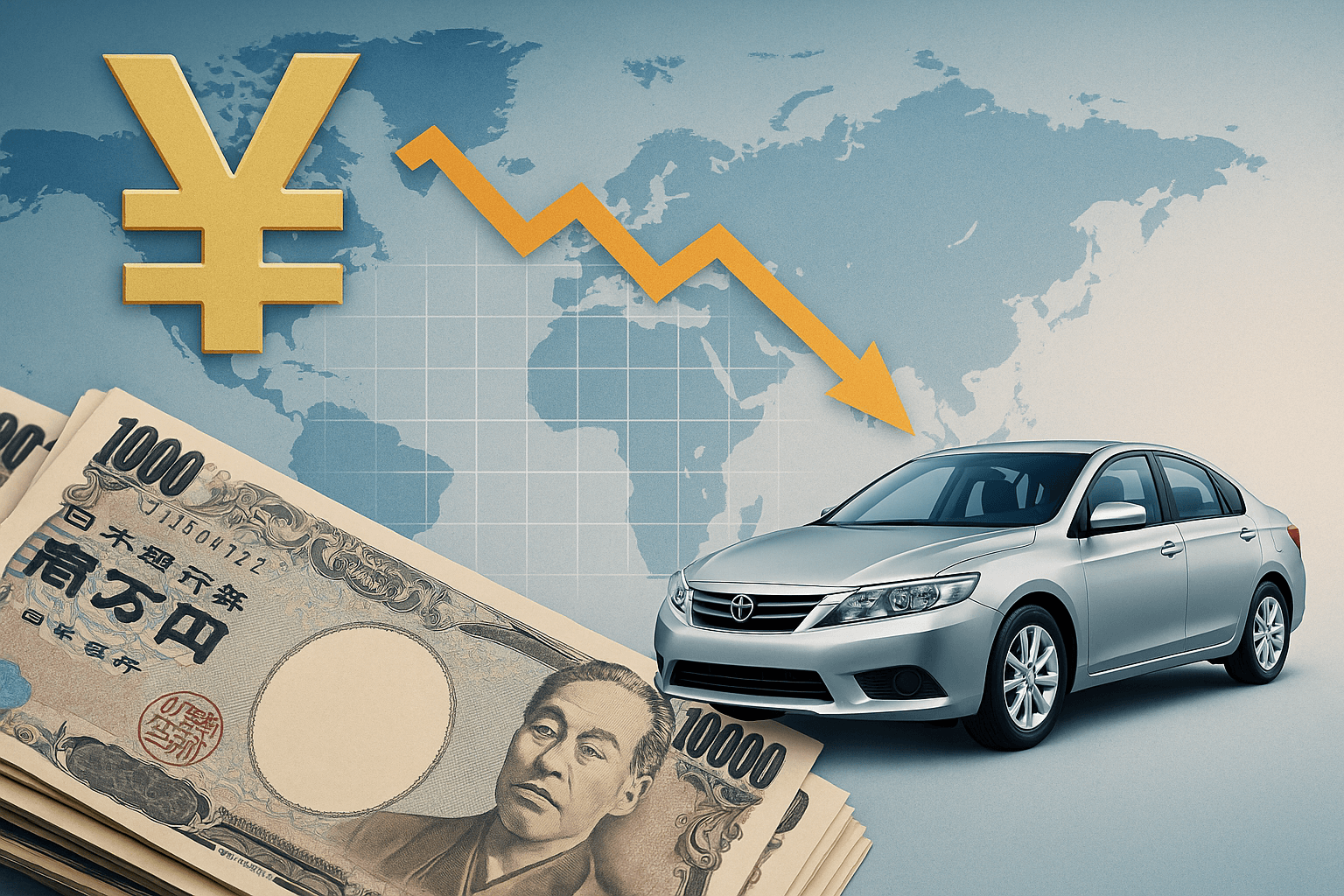
💴 How Yen Depreciation is Impacting Japan’s Used Car Exports
📉 What Is Yen Depreciation?
Yen depreciation means the Japanese yen has lost value compared to foreign currencies like the U.S. dollar.
Example:
- 1 USD = 100 JPY → A ¥1,000,000 car costs ~$10,000
- 1 USD = 150 JPY → The same car now costs only ~$6,667
So from a global buyer’s perspective, Japanese cars become more affordable, fueling demand.
🚀 Benefits of a Weak Yen for Exporters
✅ Increased Global Demand
Buyers across Africa, the Middle East, and Southeast Asia see Japanese cars as more cost-effective. Orders rise significantly when the yen weakens.
✅ Higher Profit Margins
Selling for $5,000 means:
- At 100 JPY/USD → ¥500,000
- At 150 JPY/USD → ¥750,000
That’s 50% more in yen, without raising your price in dollars.
✅ Stronger Price Competitiveness
Japanese cars become cheaper than those from Korea, Germany, or the U.S., giving Japan a clear advantage—especially when combined with its reputation for quality.
📊 What the Data Says
- 2024 Export Volume: 1.56 million used cars
- Total Value: ¥1.54 trillion
- Year-on-Year Growth: +2.0% in volume / +17.4% in value
🔍 This suggests demand is rising not just in quantity, but in price per unit.
🌍 Where Are the Cars Going?
🇦🇪 UAE – a gateway to Middle East and Africa
🇰🇪 Kenya & East Africa – high demand for right-hand-drive vehicles
🇷🇺 Russia – still hungry for Japanese models despite political risks
🇨🇱 Chile & 🇳🇿 New Zealand – hybrid and eco-friendly models booming
⚠️ Risks to Watch Out For
🚢 Rising Shipping Costs
Fuel and freight are USD-based, so a weak yen can make logistics more expensive.
🔧 Higher Maintenance Costs
Pre-export inspections or repairs that rely on imported parts become costlier.
💱 Exchange Rate Fluctuations
Sudden yen strength between deal and payment could shrink your profit. Consider hedging tools.
🔮 What’s Next in 2025?
📉 Will the Yen Stay Low?
If U.S. interest rates remain high and Japan maintains its easing policies, yes. But markets shift fast—exporters must stay agile.
🧠 How to Succeed in a Weak Yen Market
- 🌐 Diversify your markets to reduce reliance on one region
- 💳 Use smart currency handling (hedging, USD invoicing, etc.)
- 🛠️ Tailor vehicles to each market’s preferences and regulations
- 📚 Stay informed on environmental/import rules abroad
✅ Final Takeaway
The weak yen in 2025 creates real, measurable opportunities for Japanese used car exporters.
✔ Buyers want more
✔ You earn more per sale
✔ Competition is outpriced
But don’t forget: this is a window, not a guarantee. Act smart. Move fast.
🚗💨 2025 is the time to grow your export business.
We write rarely, but only the best content.