
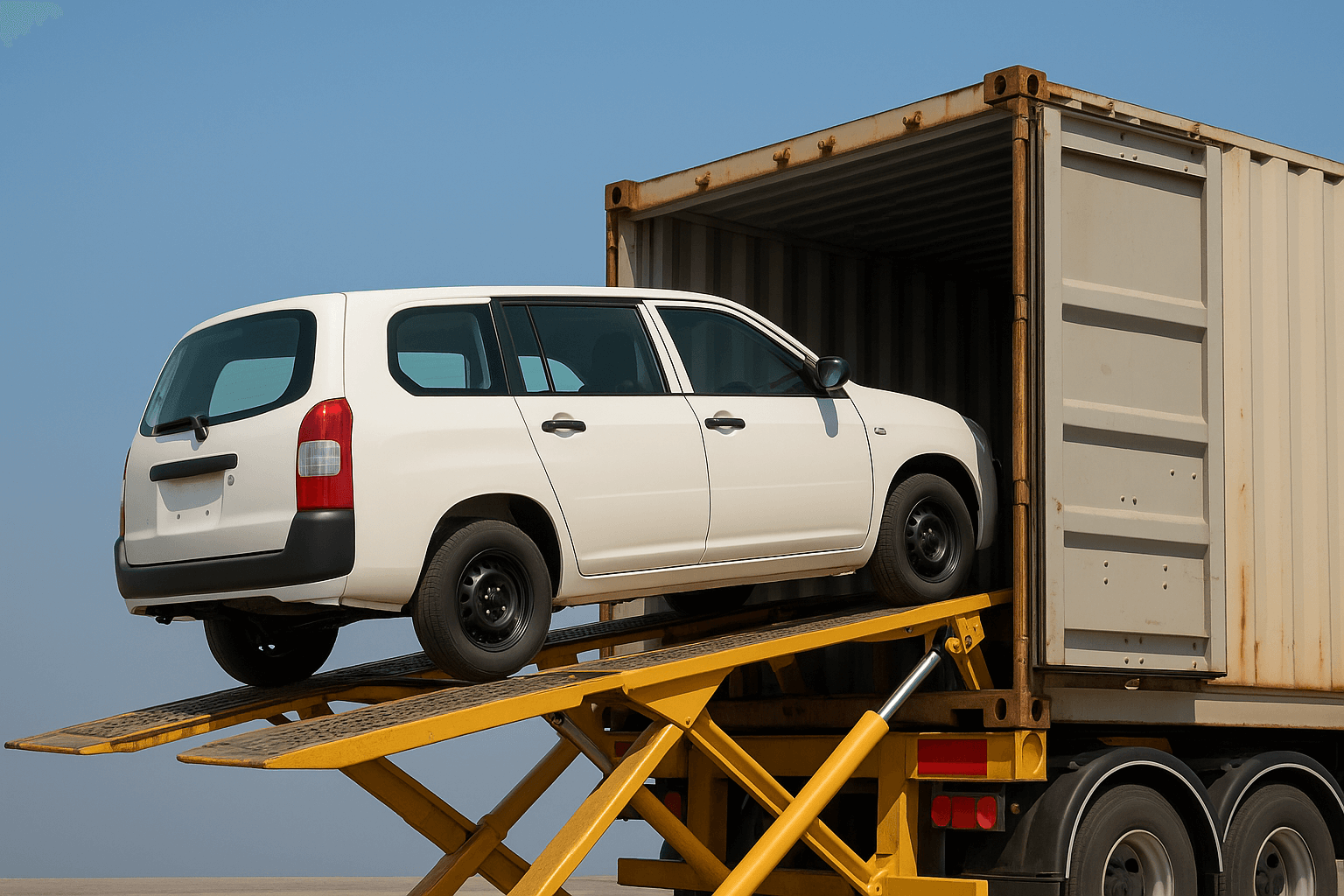
🚗💸 Make Money with the Used Car Export Business
Start Small, Grow Big: A Real-World Guide to Profitable Global Trade
Looking for a business that doesn’t require a physical store, has global demand, and offers high margins?
Welcome to the world of used car export — a realistic and scalable business that you can start with minimal capital and grow into a six-figure operation.
This article will show you why Japanese used cars are in demand worldwide, how to get started, what kind of profits you can expect, and what to watch out for if you want to build a sustainable business.
🌍 Why Exporting Japanese Used Cars Is Profitable
Japanese cars are trusted globally for their:
✅ Quality & Maintenance
- Strict inspection (shaken) laws mean well-maintained vehicles with low mileage
- Clean interiors, no rust, and documented service histories
✅ Brand Power
- Brands like Toyota, Honda, Nissan, Mazda are famous for durability
- Global parts availability and low maintenance costs make them ideal in developing nations
✅ Cost Efficiency
- Japan’s domestic market leads to depreciation rates that favor exporters
- With favorable exchange rates, foreign buyers get more value for their money
💡 In many regions, a used Japanese car isn’t just transport — it’s an economic asset.
💼 The Used Car Export Business Flow: Step-by-Step
🗺 Step 1: Choose a Target Country
Different countries have different rules and demand patterns. Here are a few examples:
| Country | Best-selling Types | Notes |
|---|---|---|
| Kenya | Toyota Probox, HiAce | 8-year age restriction for used vehicles |
| Pakistan | Kei cars (660cc), sedans | High taxes based on engine size |
| Fiji | SUVs, 4WDs | Requires reliable freight & banking setup |
| New Zealand | Subaru, Mazda, compact SUVs | 0% import duty, strict emission standards |
🚙 Step 2: Source Vehicles in Japan
- Auction Sites (USS, TAA, etc.)
→ Wholesale pricing, vehicle history data, high transparency - Used Car Dealers & Trade-ins
→ Build local relationships for bulk purchases - Private Sellers (via apps or referrals)
→ Lowest cost, but requires good inspection skills - Fleets & Closed Businesses
→ Acquire multiple units at a discount
🚢 Step 3: Export Logistics & Documentation
- Prepare documents: invoice, de-registration certificate, inspection reports
- Customs clearance: handle via licensed brokers or DIY (if experienced)
- Shipping: choose RORO (Roll-on/Roll-off) for bulk or container shipping for protection
⏱ Average shipping time:
- Southeast Asia: 2–3 weeks
- Africa/Middle East: 4–8 weeks
🌐 Step 4: Sell the Vehicle Overseas
- Sell directly to local dealers (ideal for recurring business)
- List online via Facebook Marketplace, WhatsApp, or country-specific platforms
- Use a local sales agent or partner to handle payments, delivery, and negotiations
🧑💼 A reliable local partner is often the key to smooth operations and getting paid on time.
💰 Realistic Profit Example
Let’s say you export a Toyota Probox to Kenya:
| Item | Amount (JPY) |
|---|---|
| Vehicle Purchase Price | ¥300,000 |
| Export & Shipping Costs | ¥180,000 |
| Total CIF (Landed Cost) | ¥480,000 |
| Sale Price (USD 6,000) | ~¥900,000 (at ¥150/USD) |
| Gross Profit | ¥420,000 |
Even after deducting fees, taxes, and partner commissions, you could clear ¥200,000–¥300,000 per unit.
🧠 5 Key Tips to Increase Profit
✅ 1. Match the Market
Know what sells — don’t export based on personal preference.
Research engine size, brand, fuel type, and even color preferences.
✅ 2. Lower the Purchase Price
Try buying directly from private sellers or wholesalers to increase margins.
✅ 3. Hedge Currency Risk
Always track exchange rates. If needed, price your listings in USD to stay stable.
✅ 4. Work with Experts
Use experienced customs brokers, freight forwarders, and compliance agents — especially at the beginning.
✅ 5. Focus on Fast Turnover
More important than making a huge profit per car is selling quickly and consistently.
A fast-moving business creates momentum, trust, and referrals.
⚠️ Risks & How to Manage Them
- Regulatory changes (emission standards, vehicle age rules)
- Customs delays or paperwork errors → Always double-check documents
- Shipping damage → Get maritime insurance
- Payment defaults → Use signed contracts, deposits, and vetted buyers
📌 Start small to learn the process — mistakes with one unit are much cheaper than with five.
✅ Summary: Real Business, Real Money — If Done Right
Used car export is not a get-rich-quick scheme — but it’s one of the most realistic, replicable, and scalable small businesses out there.
Start with:
- 1–2 units a month
- Solid local and overseas connections
- Consistent research and follow-through
And you can realistically expect to earn:
👉 ¥50,000–¥300,000 per month in net profit — even as a side hustle.
We write rarely, but only the best content.