
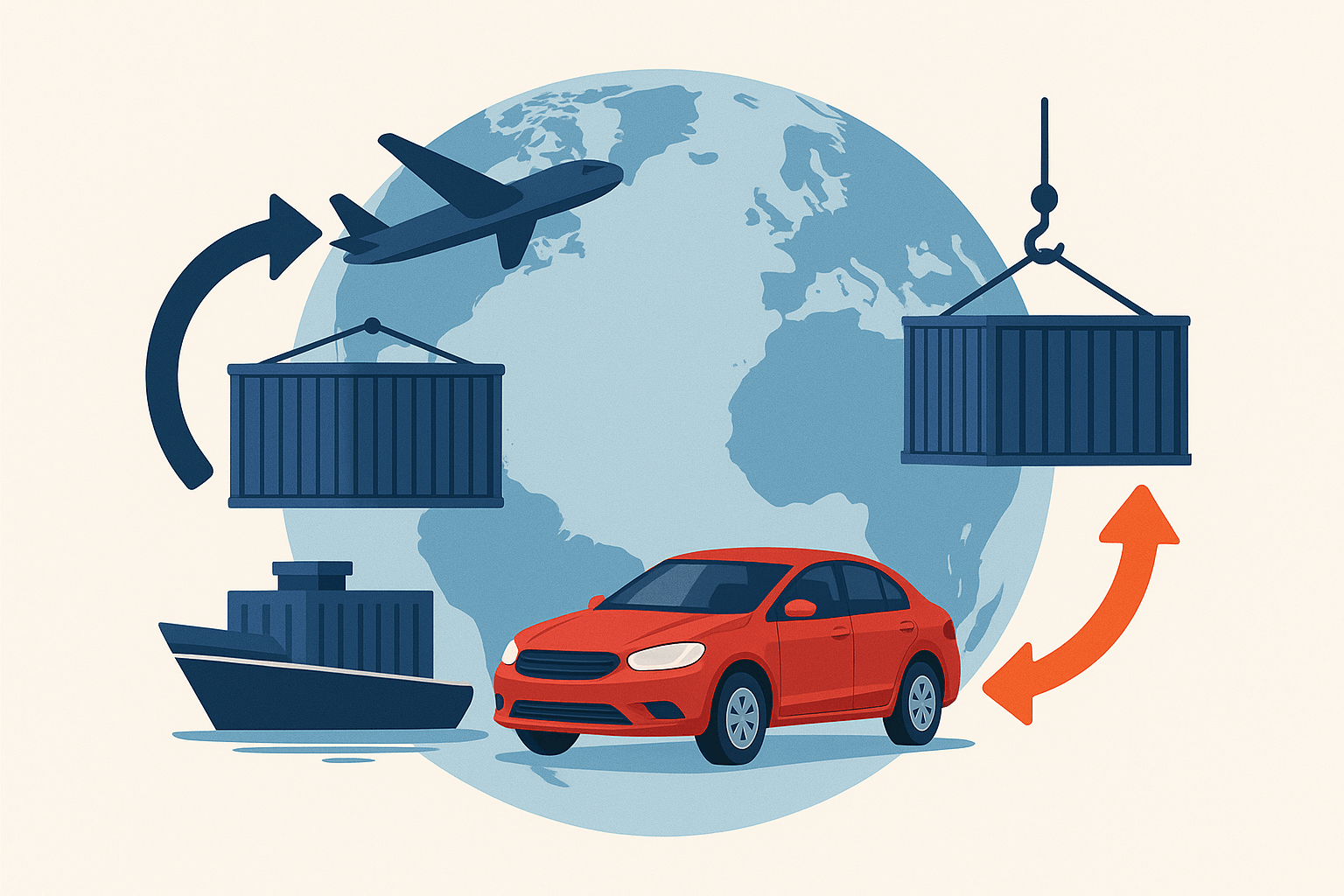
🌐 Global Guide to Car Import & Export Tariffs 🚗💰
What You Must Know to Succeed in the Global Automotive Trade
International vehicle trading is a high-value business, with transactions ranging from tens of thousands to millions of dollars. One of the most critical cost factors affecting profitability is tariffs — taxes imposed when cars cross borders.
Tariff rules vary greatly depending on the country and are influenced by economic strategy, trade agreements, and domestic industry protection. In this article, we’ll explore the topic from a global perspective, covering both car export and import tariff systems, and share actionable insights for businesses aiming to go global.
🌍 Global Trade Dynamics: Tariffs in the Automotive Industry
🔁 Free Trade vs. Protectionism
- Many WTO (World Trade Organization) member nations are gradually reducing tariffs under global trade liberalization efforts.
- At the same time, emerging economies often maintain high tariffs to protect their domestic automotive industries.
- FTA/EPA agreements (Free Trade Agreements / Economic Partnership Agreements) allow tariff-free or reduced-rate trading between specific countries or regions.
📌 Example: Under the Japan–Chile EPA, Japanese vehicles can be exported to Chile with 0% import duty.
🚢 Car Exports: When Tariffs Become a Business Barrier
✈️ High-Tariff Countries: Strategic Protection in Action
| Country | Typical Tariff Rate | Reasoning |
|---|---|---|
| Bangladesh | Up to 100%+ | Protect foreign exchange, promote local assembly |
| Sri Lanka | Often 200%+ | Crisis control and import suppression |
| Nigeria | 35–70% | Local automotive industry protection |
These markets can be lucrative due to high resale values — but only if your pricing, logistics, and compliance are airtight.
✅ Tariff-Friendly Export Destinations
| Country/Region | Tariff Rate | Advantage |
|---|---|---|
| New Zealand | 0% (GST only) | Right-hand drive market, no tariffs |
| UAE (Dubai) | ~5% | Low tax + ideal re-export hub |
| Chile (via EPA) | 0% | Free-trade agreement with Japan |
🚀 Tip: These countries are excellent entry points for expanding your global automotive reach — especially when paired with smart shipping strategies.
🇯🇵 Car Imports to Japan: Low Tariffs, High Technical Barriers
💡 Japan’s Import Tariff: 0% — But That’s Not the Whole Story
- Tariff for passenger cars (HS Code 8703): 0%
- However, 10% consumption tax is imposed on the total CIF value (Cost + Insurance + Freight).
- Importers may also face:
- Vehicle testing (emission, noise)
- Safety regulation compliance (especially LHD vehicles)
- Modification costs
📌 In practice, technical and regulatory hurdles often matter more than the tariffs themselves when importing cars into Japan.
🌐 Three Global Tariff Strategies Every Business Should Know
① Leverage Trade Agreements (FTA/EPA)
Examples:
- Japan–EU EPA eliminates duties on European cars, accelerating imports of BMW, Mercedes, etc.
- RCEP (Regional Comprehensive Economic Partnership) gradually reduces tariffs across Asia.
→ Using trade agreements can significantly reduce or eliminate tariffs, giving your business a pricing edge.
② Master the HS Code System
The Harmonized System (HS) Code determines how a car is classified — and what tariff applies.
| HS Code | Description | Tariff Implication |
|---|---|---|
| 8703 | Passenger vehicles | Usually low or zero tariff |
| 8704 | Trucks/commercial | Often higher tariff |
💡 Tip: Misclassification leads to overpayment or customs delays. Be accurate and strategic.
③ Optimize Global Supply Chains with Tariff-Friendly Hubs
- Use low-tariff or duty-free countries as re-export bases
(e.g., Dubai for Africa, Singapore for Asia) - Distribute inventory based on import costs and tax benefits
- Manage cash flow and customs clearance more effectively
📦 This “transit trading” model allows you to bypass certain tariff regimes and maximize margin across regions.
📈 Winning With Tariff Knowledge = Business Advantage
Many believe tariffs are uncontrollable — but smart traders know how to:
- Research and anticipate policy shifts
- Choose the right markets based on cost structures
- Work within legal frameworks to reduce effective tax burdens
By building these capabilities, your business can expand faster, price more competitively, and stay compliant globally.
✅ Summary: Tariffs Don’t Have to Be a Barrier
🌐 Key Takeaways:
- Each country has its own unique tariff and tax structure — study them carefully
- Japan has zero import tariffs, but strict technical regulations
- Trade agreements like EPA/FTA can eliminate tariffs if used strategically
- Accurate classification, local rules, and up-to-date info = global success
We write rarely, but only the best content.