
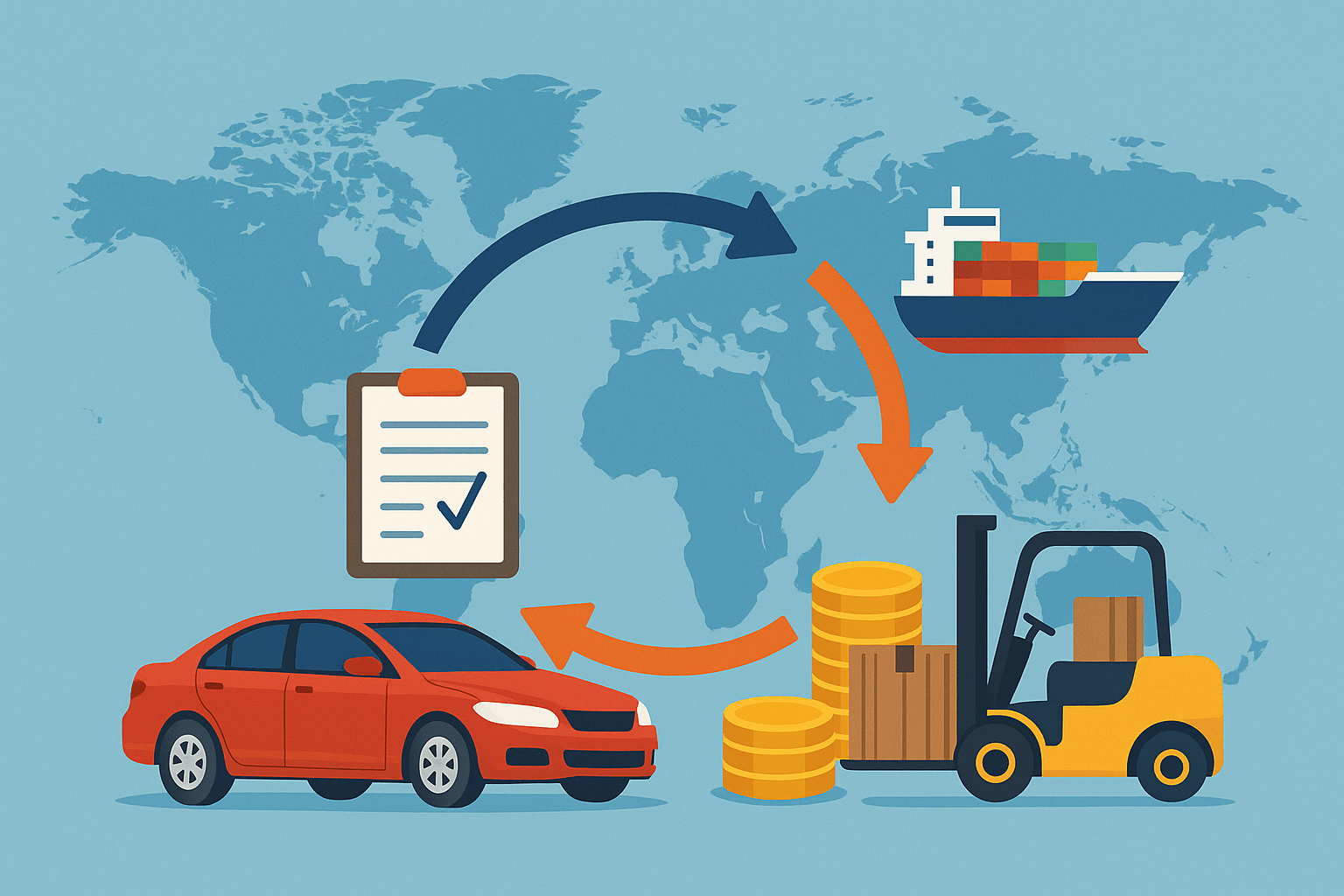
🌍 A Complete Guide to Used Car Import & Export 🚗💼
Start Your Own Global Automotive Business – Even as a Beginner!
Japanese used cars are in high demand worldwide — and within Japan, imported vehicles like American muscle cars and European classics are also growing in popularity. This guide walks you through both the export and import sides of the used car business, with practical steps, insights, and warnings for beginners looking to get started.
🚢 Why Used Car Trading Is Hot Right Now
The global automotive market values Japanese cars for their reliability, affordability, and excellent maintenance records. Many countries prefer them because:
- Strict Japanese vehicle inspections mean cars are well-kept
- Most Japanese used cars have low mileage
- Prices are often more competitive than domestic models in foreign countries
On the flip side, imported vehicles like vintage Mustangs or German sports cars appeal to niche buyers in Japan. This double demand creates unique opportunities on both sides of the trade.
🌐 Exporting Used Cars: From Japan to the World
🔍 Step 1: Research the Market in Target Countries
Every country has its own preferences and regulations. Here are some examples:
- Kenya, Tanzania: Prefer Toyota SUVs and pickup trucks
- Russia, Mongolia: Value 4WD vehicles for rugged terrain
- Caribbean nations: Love compact and fuel-efficient Japanese cars
- New Zealand: Favors right-hand drive Japanese imports
⚠️ Some countries have age restrictions on imported cars (e.g., no older than 8 years), so always check the rules before purchasing stock.
🏪 Step 2: Sourcing the Right Cars in Japan
Used car sourcing methods in Japan include:
- Used Car Auctions: Major networks like USS or TAA, accessed online
- Dealer-to-dealer purchases: Requires local networking and trust
- Direct buys from individuals: Can be high-margin, but needs negotiation skills
You’ll want to choose vehicles that are both in-demand and logistically feasible for your target countries.
📄 Step 3: Export Procedures & Shipping
To export a car from Japan, you’ll need to:
- Create a commercial invoice and packing list
- Submit an export declaration to Japanese customs
- Arrange shipping via RoRo (Roll-on/Roll-off) or container
- Obtain a Bill of Lading (BL) and send it to your buyer
💡 Pro tip: Partner with experienced freight forwarders and customs brokers to avoid delays.
🇯🇵 Importing Used Cars: From Abroad to Japan
✨ Why Import Cars Into Japan?
- Unique or rare models not sold in Japan
- Collectible or luxury vehicles (e.g., Porsche, classic Mustangs)
- Preference for left-hand drive or foreign design aesthetics
But note: Japan has very strict standards for emissions, noise, and safety. Be prepared for testing, modification, and inspection costs.
🔧 Step 1: Sourcing and International Shipping
Ways to find vehicles for import:
- Online auctions like Copart or IAAI (USA)
- Used car platforms in Europe or the US
- Local brokers or exporters who can help with paperwork
🚚 Vehicles are typically shipped in containers and take 2–4 weeks to arrive. Insurance is highly recommended to cover any transit damage.
🧾 Step 2: Customs Clearance & Registration in Japan
To register a foreign car in Japan:
- Submit an import declaration and pay any customs duties/taxes
- Conduct emissions and noise tests (especially for non-Japanese vehicles)
- Modify the vehicle if it doesn’t meet Japan’s standards
- Complete vehicle inspection (shaken) and get it registered
Here’s a rough cost breakdown:
| Item | Estimated Cost |
|---|---|
| International Shipping | ¥200,000 – ¥500,000 |
| Import Taxes & Customs Fees | 10–20% of car value |
| Registration & Inspection | ¥50,000 – ¥150,000 |
| Modifications & Emission Tests | ¥100,000 – ¥300,000 |
⚠️ Key Risks & Tips for Used Car Trading
💱 Exchange Rate & Shipping Delays
Currency fluctuations can affect your profit margin. Always lock in deals and shipping ASAP to avoid market swings.
🕵️ Vehicle Condition Verification
Use third-party inspection services or trusted agents to check for accidents, repairs, and mileage tampering before buying.
🤝 Choose Reliable Partners
From freight forwarders to local buyers, your business will rely heavily on external partners. Reputation and communication are everything.
✅ Final Thoughts: Small Start, Big Potential
Used car import/export is one of the most accessible forms of global trade. With the right knowledge and careful planning, even individuals or small teams can start this business.
🔑 Success checklist:
- 🌏 Know your target country’s car preferences and regulations
- 🚗 Source cars that are in demand and in good condition
- 📋 Handle paperwork and logistics efficiently
- 🤝 Build strong, reliable partnerships across borders
We write rarely, but only the best content.